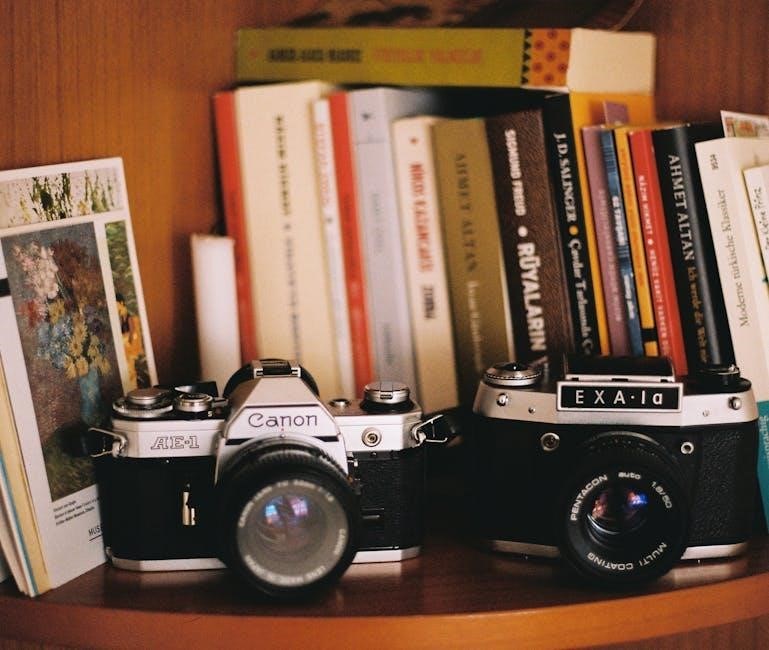
Canon AE-1: A Deep Dive into Full Manual Operation
The Canon AE-1, while primarily shutter-priority, can be utilized in full manual mode with a slight workaround. Both the AE-1 and A-1 offer manual shooting capabilities,
leveraging the camera’s metering to suggest aperture settings based on your chosen shutter speed.
The Canon AE-1, released in 1976, revolutionized the 35mm photography landscape, becoming one of the world’s best-selling SLR cameras. While often celebrated for its innovative shutter-priority auto-exposure mode, a common question arises: is the AE-1 truly capable of full manual operation? The answer is nuanced. The AE-1 wasn’t designed as a fully manual camera in the same vein as the Nikon FM or the Canon F-1, but it can be effectively used in a manual mode.
However, achieving full manual control requires understanding a specific “workaround” involving the camera’s metering system. The AE-1’s strength lies in its ability to suggest appropriate aperture settings based on a user-selected shutter speed, allowing for informed manual adjustments. This isn’t a traditional match-needle system, but a helpful guide. It’s important to note that the A-1, a later model, offers a more streamlined manual experience, displaying the selected shutter speed directly in the viewfinder – a feature absent in the AE-1.
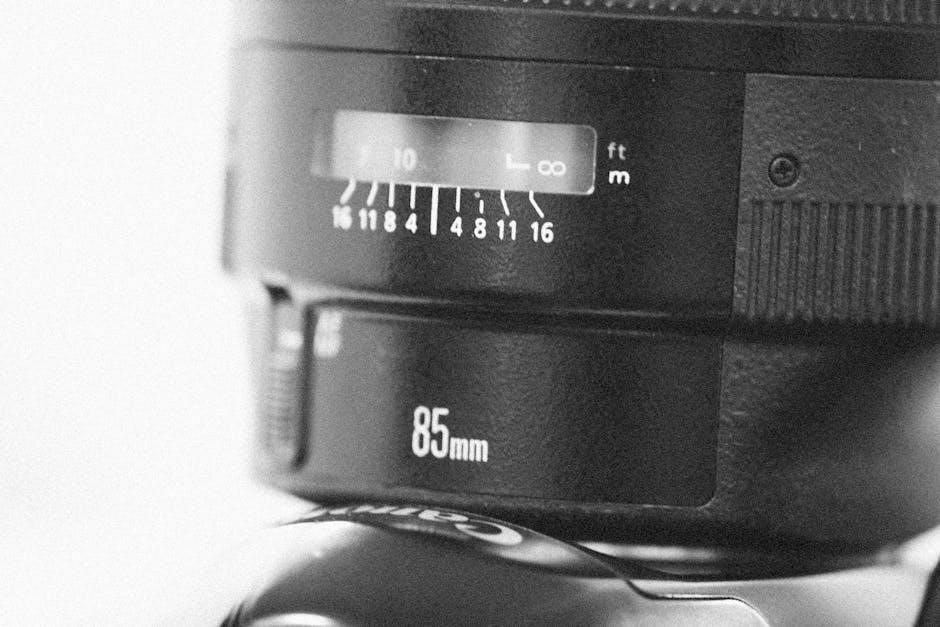
Despite this, the AE-1 remains a compelling choice for photographers seeking a blend of automation and manual control, offering a tactile and engaging shooting experience. Its robust build quality and extensive lens compatibility further contribute to its enduring appeal.
Understanding the Canon FD Mount
The Canon FD (Focusing Device) mount is integral to the AE-1’s functionality and its ability to achieve manual control. Introduced in 1971, the FD mount was Canon’s standard for 35mm SLR cameras until the introduction of the EF mount in 1987. This breech-lock design, while initially innovative, differs significantly from the bayonet mounts common on many modern cameras. Understanding its mechanics is key to appreciating the AE-1’s operation.
The FD mount allows for a wide range of Canon FD lenses, offering diverse focal lengths and apertures. These lenses communicate aperture information to the camera body, crucial for the AE-1’s metering system, even when operating in the “workaround” manual mode. The mount’s design necessitates a specific technique for lens attachment and removal, involving a rotating and locking mechanism.
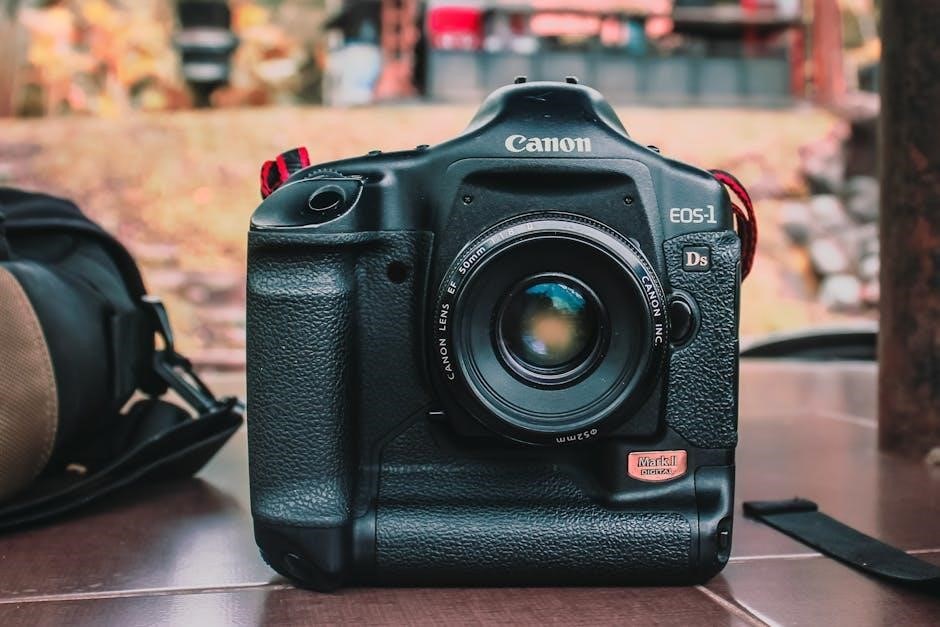
While the FD mount facilitated Canon’s lens innovations, it also presented limitations in terms of compatibility with later autofocus systems. However, its robust construction and the quality of FD lenses continue to make the AE-1 a viable platform for manual photography enthusiasts. The FD mount is the foundation for unlocking the AE-1’s potential.
The AE-1’s Metering System – Beyond Automatic
The Canon AE-1’s metering system, though designed for shutter-priority auto-exposure, is surprisingly useful even when pursuing full manual control. It doesn’t offer a direct, traditional match-needle display, but it provides crucial guidance. The camera assesses the light and indicates the aperture it would select for a given shutter speed. This isn’t automatic operation; it’s information to inform your manual settings.
This metering feedback is displayed through the viewfinder, allowing you to compare the suggested aperture with your artistic intent. You can then choose to accept the camera’s recommendation, or deliberately over/under-expose for creative effect. It’s a semi-automatic assist, not a fully automated process.
The AE-1’s system, while requiring a “workaround” to fully bypass shutter priority, isn’t inconvenient compared to older match-needle meters that force you to remove the camera from your eye to check exposure. The AE-1 keeps the information readily visible. It’s a sophisticated system cleverly adapted for manual use, offering a blend of technology and photographer control.
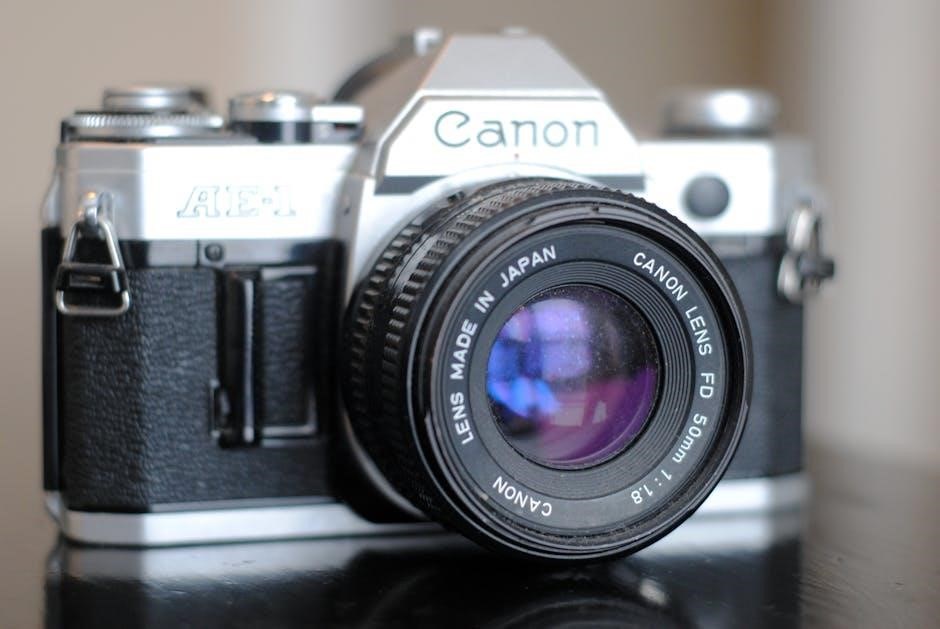
Using Shutter Priority Mode as a Foundation
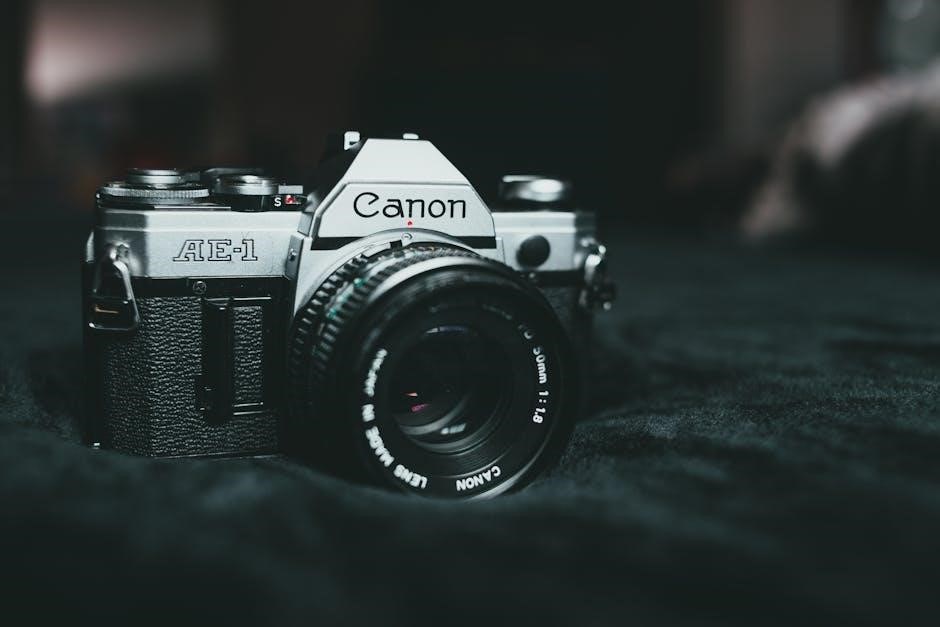
While aiming for full manual control, understanding the Canon AE-1’s shutter priority mode is surprisingly beneficial. It’s not a detour, but a stepping stone. The AE-1 excels in shutter priority, often achieving correct exposure 90% of the time. This inherent accuracy provides a reliable starting point for manual experimentation.
Instead of fighting the camera’s strengths, leverage them. Select your desired shutter speed, observe the aperture the AE-1 suggests, and then consciously override it if you wish; This approach is faster and more intuitive than blindly guessing settings. It allows you to focus on creative aperture choices, knowing the camera has established a solid base exposure.
If the camera’s suggested aperture aligns with your vision, there’s little point in switching to full manual. The “faffing about” of manual mode becomes unnecessary. Shutter priority, in this context, isn’t a limitation, but a tool for efficient and informed manual adjustments, streamlining the photographic process.
Navigating Aperture Control in Manual Mode
Achieving true manual control with the Canon AE-1 requires understanding how to override the camera’s suggested aperture. After selecting a shutter speed, the AE-1 displays an aperture recommendation. This isn’t a fixed value; it’s a starting point for your creative input. The key is to deliberately choose a different aperture, based on your desired depth of field or artistic effect.
Rotating the aperture ring on your FD lens allows you to deviate from the camera’s suggestion. Remember the relationship between aperture and depth of field – wider apertures (smaller f-numbers) create shallow depth of field, while narrower apertures (larger f-numbers) increase it. Consider your subject and the story you want to tell.
This process, while slightly indirect, offers significant control. It’s about taking the camera’s metering as a guide, then asserting your artistic vision. The AE-1’s manual mode isn’t about ignoring the meter, but about intelligently using it as a foundation for your creative decisions.
The “Workaround” for Full Manual Exposure
The Canon AE-1 doesn’t offer a traditional, direct manual mode like some cameras with match-needle or match-LED metering systems. Instead, it employs a “workaround” to achieve full manual control. This involves setting your desired shutter speed, observing the aperture value the camera recommends, and then intentionally selecting a different aperture if desired.
Essentially, you’re using the AE-1’s metering system as a light meter, rather than allowing it to fully automate the exposure. This method isn’t inherently less convenient than traditional systems, as many require taking the camera from your eye to interpret the metering display. The AE-1’s approach keeps the metering information readily available.
While it requires a conscious decision to override the suggested aperture, it provides a flexible and effective way to achieve precise manual exposure. It’s a testament to the AE-1’s adaptability, allowing photographers to harness its capabilities beyond its default shutter-priority operation.
Interpreting the AE-1’s Metering Display
The Canon AE-1’s metering display, crucial for manual operation, presents a +/- indicator within the viewfinder. This system doesn’t directly show the selected shutter speed; instead, it indicates whether your chosen aperture (after setting a shutter speed) results in over or underexposure relative to the camera’s assessment of the scene.
A “+” signifies overexposure, meaning the camera believes the selected settings will capture too much light. Conversely, a “-” indicates underexposure, suggesting insufficient light will reach the sensor. The goal in manual mode is to adjust either the aperture or shutter speed until the indicator centers, achieving a balanced exposure according to the AE-1’s meter.
Understanding this display is key to utilizing the “workaround” for full manual control. It allows you to leverage the AE-1’s metering capabilities as a guide, even while overriding its automatic aperture selection. Mastering this interpretation unlocks the camera’s full potential for creative, manual photography.
Comparing the AE-1 to the Canon A-1 for Manual Use
When comparing the Canon AE-1 and A-1 for manual shooting, the A-1 gains a slight edge due to its integrated shutter speed visibility within the viewfinder. The AE-1 requires more reliance on the +/- metering display and iterative adjustments to achieve desired exposure, while the A-1 offers a quicker, more direct process.
Both cameras necessitate a “workaround” – selecting a shutter speed and then adjusting the aperture based on the camera’s metered suggestion. However, the A-1’s immediate shutter speed display streamlines this process, reducing the need to take the camera from your eye to check settings. This efficiency can be valuable in dynamic shooting situations.
Despite this advantage, the AE-1 remains a capable manual camera. Many photographers find the slight extra effort acceptable, especially considering the AE-1’s often lower cost. Ultimately, both offer a satisfying manual experience, with the A-1 providing a more convenient workflow.
The Advantage of Shutter Speed Visibility in the Viewfinder (A-1)
The Canon A-1’s key advantage for manual operation lies in its direct display of the selected shutter speed within the viewfinder. This seemingly small feature significantly accelerates the exposure setting process, minimizing the time spent with the camera detached from your eye. With the AE-1, you must rely on the metering display and mentally calculate or iteratively adjust the aperture.
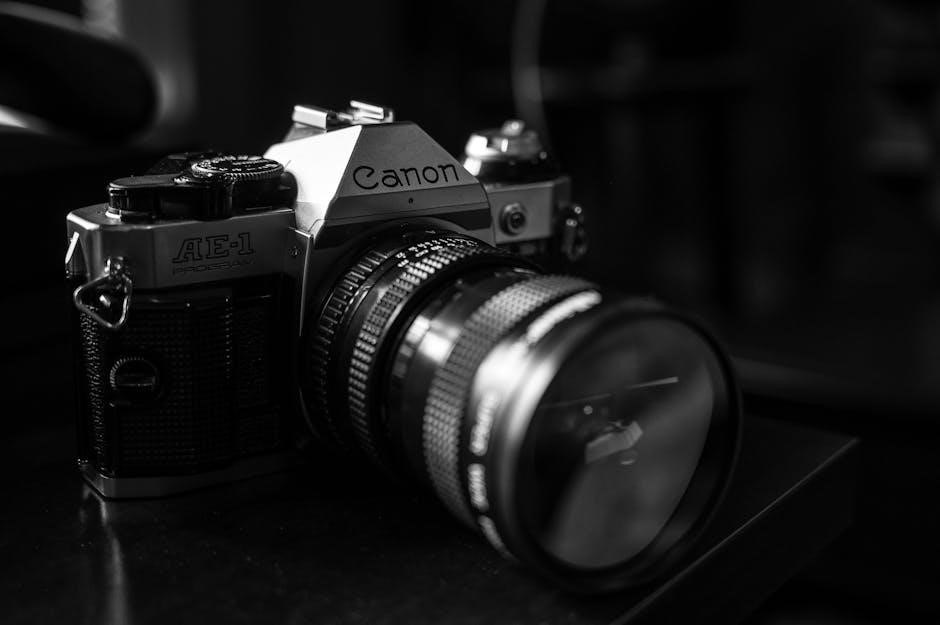
This immediate feedback offered by the A-1 allows for a more intuitive and fluid workflow. You can quickly assess the relationship between shutter speed and aperture, making precise adjustments without interrupting your composition. It’s a benefit particularly noticeable in rapidly changing light conditions or when tracking moving subjects.
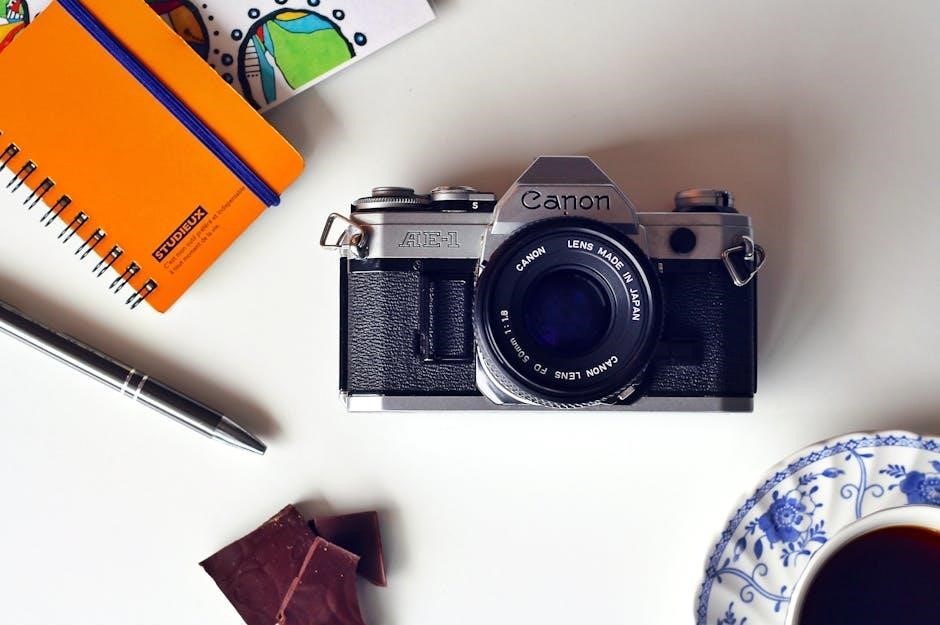
While the AE-1’s manual mode isn’t inconvenient, it’s undeniably less efficient. The A-1’s viewfinder display transforms manual exposure from a process of deduction to one of direct observation and control, enhancing the overall shooting experience.
Alternative Canon FD Cameras Designed for Manual Operation
For photographers prioritizing a fully manual experience within the Canon FD system, several alternatives to the AE-1 exist. The Canon AT-1 is essentially an AE-1 stripped of automatic modes, offering a dedicated, all-manual operation without the need for workarounds. This makes it a straightforward choice for those seeking a traditional shooting style.
Stepping up in price and features, the Canon F-1 and New F-1 provide professional-grade manual control. The F-1 is exclusively manual, while the New F-1 offers both manual and automatic capabilities depending on the prism used. These cameras are renowned for their build quality and extensive customization options.
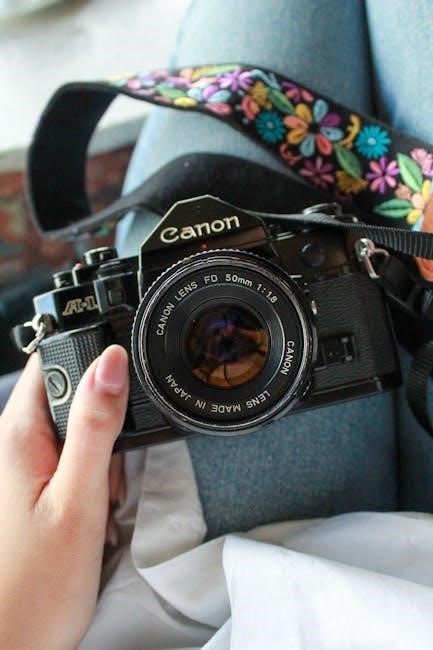
More affordable options include the FTb, TLb, and TX models. These cameras deliver reliable manual metering without the advanced features of the F-1, presenting a cost-effective entry point into the world of FD manual photography. Each offers a direct and tactile shooting experience, bypassing the AE-1’s shutter-priority foundation.
The Canon AT-1: A Fully Manual AE-1 Variant
The Canon AT-1 stands as a compelling alternative for those desiring a purely manual Canon FD experience, effectively functioning as an AE-1 designed exclusively for manual operation. Unlike its shutter-priority sibling, the AT-1 eliminates the automatic modes entirely, providing direct control over both aperture and shutter speed without any electronic assistance or “workarounds.”
This simplicity appeals to photographers who prefer a traditional, hands-on approach to exposure. The AT-1’s metering system functions as a center-weighted average, displaying readings through the viewfinder to aid in setting accurate exposures. It offers a match-LED system, indicating under or overexposure, guiding users to the optimal settings.
Essentially, the AT-1 delivers the familiar AE-1 body and handling, but with a dedicated manual experience. It’s a robust and reliable camera, ideal for those who find the AE-1’s automatic features unnecessary or prefer the directness of a fully manual system. It’s a direct path to manual FD shooting.
Exploring the Canon F-1 and New F-1
For photographers seeking a fully manual Canon FD experience, the original Canon F-1 presents an excellent option. Designed exclusively for manual operation, the F-1 offers complete control over both aperture and shutter speed, devoid of any automatic modes found in the AE-1. Its robust build quality and professional-grade features made it a favorite among serious photographers.
The New F-1 expands upon this foundation, introducing compatibility with various prisms, some of which offer automatic features. However, the New F-1 retains a dedicated manual mode, allowing users to revert to full control whenever desired. This versatility caters to photographers who appreciate both manual precision and the convenience of automation.
Unlike the AE-1, which requires a workaround to achieve full manual control, the F-1 and New F-1 provide a straightforward, dedicated manual experience. These cameras represent the pinnacle of Canon’s FD manual systems, offering a direct and intuitive shooting process for those who prefer complete control over their exposures.
Lower-Cost Manual FD Options: FTb, TLb, and TX
Beyond the professional-grade F-1 and New F-1, Canon offered several more affordable FD cameras designed primarily for manual operation. The FTb, TLb, and TX models provide a compelling entry point for photographers interested in exploring the FD system without the higher cost associated with the flagship cameras.
These cameras, like the F-1, feature a traditional manual metering system, typically employing a match-needle or match-LED display. This requires the photographer to adjust aperture and shutter speed until the meter indicates proper exposure, offering a hands-on learning experience. Unlike the AE-1’s workaround, these cameras are inherently manual.

While lacking the advanced features of the F-1, the FTb, TLb, and TX are reliable and capable cameras. They represent a practical alternative for those seeking a fully manual FD experience on a budget, providing a direct connection to the photographic process and fostering a deeper understanding of exposure principles.
Practical Tips for Accurate Manual Exposure with the AE-1
Mastering manual exposure with the Canon AE-1 requires understanding its metering system and utilizing it effectively, even within the “workaround.” Begin by selecting your desired shutter speed, considering the subject’s motion and desired effect; The AE-1 will then indicate the aperture it recommends for correct exposure.
Don’t blindly accept this suggestion; consider your creative intent. Do you want greater depth of field? Stop down (increase the f-number). Prefer a shallow depth of field? Open up (decrease the f-number). Regularly check the AE-1’s metering display to confirm your chosen settings align with the light conditions.
Practice bracketing – taking multiple shots at slightly different apertures – to ensure proper exposure, especially in challenging lighting. Remember, the AE-1’s strength lies in its shutter priority mode, so if the camera’s suggested aperture consistently suits your needs, embrace that efficiency. Ultimately, consistent practice builds intuition and accuracy.
Resources for Canon AE-1 Users and Repair
For Canon AE-1 enthusiasts seeking information and support, numerous online resources exist. Websites dedicated to classic cameras, like those focusing on the FD mount system, offer forums, repair guides, and user experiences. These communities are invaluable for troubleshooting issues and learning advanced techniques, including maximizing manual control.
Repairing an AE-1 can range from simple DIY tasks – like cleaning the film plane or replacing light seals – to more complex procedures best left to professionals. Several reputable camera repair shops specialize in vintage Canon equipment; Expect to find resources detailing common AE-1 problems, such as shutter issues or metering inaccuracies.

Online marketplaces often host original Canon manuals and accessories. Consider joining FD camera groups on social media platforms for quick advice and shared knowledge. Remember, while the AE-1 isn’t fully manual out-of-the-box, understanding its quirks and available resources unlocks its full potential.