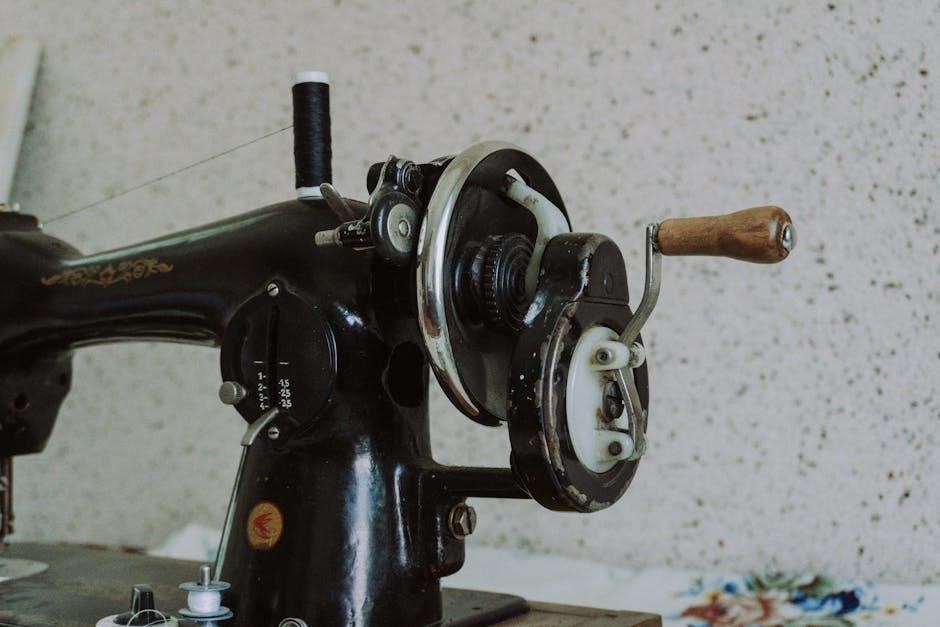
Husqvarna Viking Sewing Machine Manual: A Comprehensive Guide
Husqvarna Viking consistently innovates, releasing machines like the Designer Ruby deLuxe and Diamond Royale, demanding detailed manuals for optimal performance and longevity.
Understanding Husqvarna Viking Models
Husqvarna Viking sewing machines encompass a broad spectrum, ranging from mechanical models ideal for beginners to sophisticated computerized machines like the Designer Ruby deLuxe and Diamond Royale; Each model possesses unique features and capabilities, necessitating a tailored understanding for effective operation. The Opal series represents a mid-range option, bridging simplicity and advanced functionalities.
Distinguishing between these models is crucial for locating the correct manual and troubleshooting effectively. Older, discontinued models may require searching specialized online resources or forums. Newer machines often benefit from interactive digital manuals and online support systems. Recognizing the specific generation and features of your machine—whether it boasts a touchscreen interface or relies on traditional dials—will significantly streamline the learning process and ensure optimal performance. Knowing your machine’s lineage unlocks its full potential.
Identifying Your Specific Model Number
Locating your Husqvarna Viking sewing machine’s model number is paramount for accessing the correct manual and support resources. This unique identifier distinguishes your machine from others, ensuring compatibility with specific instructions and parts. Typically, the model number is found on a sticker or plate affixed to the machine itself.
Common locations include the underside of the machine base, the back panel, or near the needle plate. It’s often a combination of letters and numbers, such as “Designer Ruby deLuxe” or “Opal 635”. Carefully inspect these areas, and consult any original packaging or documentation if available. Having this number readily available will expedite the process of finding digital manuals, troubleshooting guides, and replacement components, maximizing your sewing experience.
Accessing Official Husqvarna Viking Manuals
Husqvarna Viking prioritizes user support, offering several avenues to access official sewing machine manuals. The primary resource is the Husqvarna Viking website, which hosts a comprehensive library of downloadable manuals categorized by model number. Navigate to their support section and utilize the search function, inputting your machine’s specific identifier for precise results.
Alternatively, contacting Husqvarna Viking customer service directly via phone or email can provide assistance in locating the appropriate manual. They may also offer to mail a physical copy, though digital access is generally faster. Ensure you have your model number handy when contacting support. Utilizing official resources guarantees accurate and up-to-date information for your machine, ensuring safe and effective operation.
Digital Manuals and Online Resources
Beyond the official Husqvarna Viking website, a wealth of digital resources exists for sewing machine owners. YouTube channels dedicated to sewing often feature tutorials and demonstrations specific to Husqvarna Viking models, offering visual guidance alongside the written manual. Online sewing forums, like those found on Reddit (r/vintagesewing), provide platforms for users to share tips, troubleshooting advice, and even scanned copies of older manuals.
Furthermore, many independent sewing blogs and websites curate information about various sewing machine brands, including Husqvarna Viking. These resources can supplement the official manual, providing alternative explanations and practical insights. Remember to verify the accuracy of information found on unofficial sources.
Locating Manuals for Discontinued Models
Finding manuals for older, discontinued Husqvarna Viking sewing machines can present a challenge, but isn’t impossible. The official Husqvarna Viking website may still archive some older manuals, though availability isn’t guaranteed. Online sewing communities, such as Reddit’s r/vintagesewing, frequently serve as repositories for shared manuals, often scanned and uploaded by fellow enthusiasts.
Additionally, exploring online auction sites like eBay can sometimes yield original, physical manuals for sale. Dedicated sewing machine parts retailers may also possess archived manuals or be able to direct you to resources. Patience and diligent searching are key when tracking down documentation for vintage Husqvarna Viking machines.
Key Features & Functions Explained
Husqvarna Viking machines boast self-guided stitching and touchscreen interfaces, like the Designer Diamond Royale, offering a wealth of features for diverse sewing projects.
Basic Machine Setup and Threading
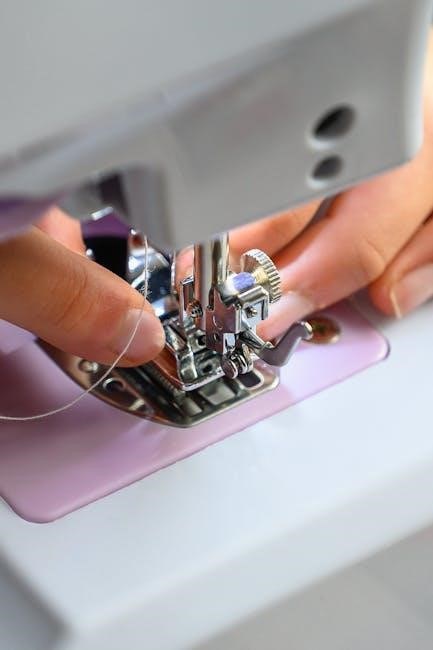
Proper setup is crucial for seamless sewing with your Husqvarna Viking machine. Begin by ensuring the power switch is off and the machine is stable on a flat surface. Familiarize yourself with the key components: the spool pin, thread guides, tension discs, take-up lever, and needle.
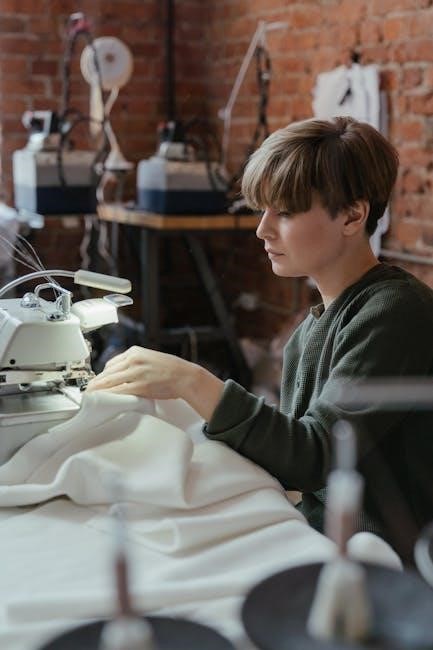
Threading involves guiding the thread from the spool, through the guides, around the tension discs (adjusting tension is vital for stitch quality!), up to the take-up lever, and finally, through the needle’s eye. Always raise the presser foot before threading to release tension.
Consult your specific model’s manual for a detailed threading diagram, as routes can vary. Incorrect threading leads to skipped stitches or thread breakage. Double-check each step to guarantee a smooth and efficient sewing experience. A correctly threaded machine is the foundation for all your creative projects!
Bobbin Winding and Insertion
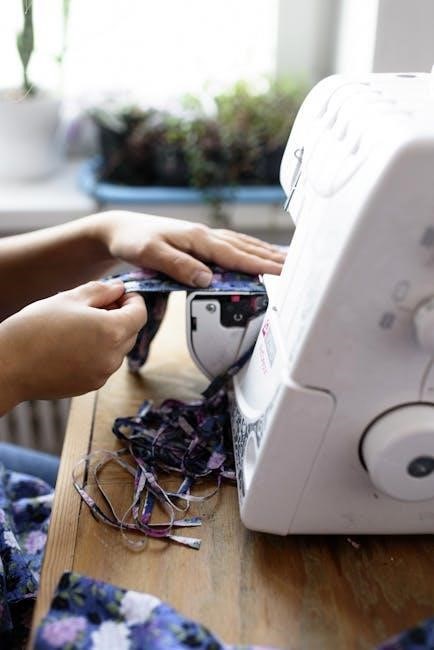
Husqvarna Viking machines utilize a reliable bobbin system, essential for forming balanced stitches. Begin bobbin winding by placing the spool on the spool pin and guiding the thread through the designated bobbin winding tension disc. Secure the thread end into the bobbin, then engage the bobbin winding mechanism – typically by pushing the bobbin spindle to the right.
Wind the bobbin evenly, stopping when full. Disengage the winding mechanism and trim the thread. Next, carefully insert the bobbin into the bobbin case, ensuring it rotates freely and the thread unwinds in the correct direction (consult your manual!).
Thread the bobbin thread through the tension spring and guides, leading it up to the needle area. Proper bobbin winding and insertion are critical for preventing thread nests and ensuring consistent stitch formation.
Stitch Selection and Adjustment
Husqvarna Viking machines offer a diverse range of stitches, selectable via the machine’s control panel or touchscreen interface – depending on the model. Begin by identifying the desired stitch in the stitch chart within your manual. Utilize the stitch selection buttons or touchscreen to choose it.
Adjust stitch length and width using the corresponding dials or on-screen controls. Experiment with settings on scrap fabric to achieve the desired look. For decorative stitches, consider stabilizer usage. Remember that different fabrics require different settings; lighter fabrics need shorter stitch lengths.
Fine-tune tension for optimal stitch balance. Proper stitch selection and adjustment are key to achieving professional-looking results.
Presser Foot Guide and Usage
Husqvarna Viking sewing machines utilize a variety of presser feet, each designed for specific tasks. Your manual details each foot’s purpose – from the standard zigzag foot to specialized options like the embroidery foot or walking foot. Correct foot selection is crucial for fabric handling and stitch quality.
To change feet, release the retaining lever located behind the needle clamp. Align the new foot with the shank and press it firmly into place until it clicks. Ensure it’s securely attached before sewing.
The manual illustrates proper foot usage for different techniques. Using the correct presser foot dramatically improves sewing precision and overall project outcome.
Troubleshooting Common Issues
Husqvarna Viking manuals provide solutions for frequent problems like needle breakage, tension issues, and jamming, ensuring smooth operation and extending machine lifespan.
Needle Breakage and Causes
Needle breakage is a common frustration for sewing machine users, and your Husqvarna Viking manual offers crucial guidance. Several factors contribute to this issue, often preventable with proper technique and maintenance. Incorrect needle size for the fabric weight is a primary cause; lighter fabrics require finer needles, while heavier materials demand stronger ones.
Furthermore, using a bent or damaged needle significantly increases the risk of breakage. Always inspect your needle before threading. Incorrect threading, particularly if forcing the thread, can also strain the needle. Similarly, pulling the fabric while sewing creates excessive pressure.
The manual emphasizes the importance of using the correct needle type for the chosen stitch and fabric – universal, ballpoint, or stretch needles each serve specific purposes. Finally, hitting a pin or other hard object during sewing will almost certainly cause a needle to break. Regularly consult your manual for detailed diagrams and recommendations.
Thread Tension Problems
Thread tension is critical for achieving balanced, professional-looking stitches on your Husqvarna Viking machine. Your manual details how to diagnose and correct tension issues, which often manifest as looping, puckering, or thread breakage. Incorrect tension can stem from several sources, including improper threading of the upper or bobbin threads.
The manual stresses the importance of following the threading path precisely, ensuring the thread is securely seated in all tension discs. Different fabric types and thread weights also necessitate tension adjustments; heavier fabrics generally require higher upper tension.
Bobbin tension, while typically pre-set, may occasionally need fine-tuning. The manual provides instructions for adjusting the bobbin case screw. Regularly cleaning the tension discs to remove lint and debris is also vital for smooth thread flow. Experimentation, guided by the manual’s recommendations, is key to finding the optimal tension settings.
Machine Jamming and Solutions
Husqvarna Viking sewing machine jams can be frustrating, but your manual provides systematic troubleshooting steps. Common causes include improper threading, tangled bobbin thread, or fabric caught within the machine’s mechanisms. Always power off and unplug the machine before attempting to clear a jam – safety first!
The manual instructs users to carefully remove the needle plate and bobbin case to inspect for tangled threads or fabric scraps. A small brush or tweezers can be helpful for removing debris. Ensure the feed dogs are clear of obstructions, as these are frequent culprits.
Avoid forcing any parts; gentle manipulation is crucial to prevent damage. Regularly cleaning and lubricating the machine, as outlined in the manual, minimizes the risk of jamming. If the jam persists, consult the manual’s diagrams or contact Husqvarna Viking support for assistance.
Error Codes and Their Meanings
Husqvarna Viking sewing machines, particularly advanced models like the Designer Diamond Royale, utilize error codes to diagnose issues. Your machine’s manual is the definitive guide to interpreting these codes, offering specific solutions for each. These codes signal problems ranging from threading errors and bobbin issues to motor malfunctions or sensor failures.
The manual typically includes a dedicated section listing each error code, a clear description of the problem it indicates, and step-by-step instructions for resolving it. Ignoring error codes can lead to further damage, so prompt attention is vital.
Referencing the manual’s error code table before contacting support can often resolve the issue independently. Remember to note the exact error code displayed for accurate troubleshooting assistance from Husqvarna Viking customer service.
Advanced Techniques & Features
Husqvarna Viking machines, such as the Designer Ruby deLuxe, offer embroidery functions, touchscreen navigation, and diverse stitch patterns – explore these features thoroughly!
Embroidery Machine Functions (Designer Ruby deLuxe & Similar)
Husqvarna Viking’s embroidery capabilities, prominently featured in models like the Designer Ruby deLuxe, extend far beyond basic stitching. Mastering these functions requires a dedicated understanding of hoop selection, stabilizer usage, and design transfer protocols. The machine’s software allows for intricate design editing, including resizing, mirroring, and color adjustments, directly on the touchscreen interface;
Digitizing your own designs is also possible, though often requires specialized software. Understanding stitch types – satin, fill, and running stitch – is crucial for achieving desired embroidery effects. Proper thread selection, based on fabric type and design complexity, significantly impacts the final result. Regularly updating the machine’s firmware ensures compatibility with the latest design formats and optimizes embroidery performance. Explore the built-in embroidery designs and learn to combine them creatively for unique projects.
Touchscreen Interface Navigation (Designer Diamond Royale & Similar)
The Husqvarna Viking Designer Diamond Royale, and similar high-end models, boast an intuitive touchscreen interface designed to simplify complex operations. Navigation relies on a combination of tapping, swiping, and pinch-to-zoom gestures. The main screen provides access to stitch selection, design viewing, machine settings, and help functions. Customizing the interface allows users to prioritize frequently used features for quicker access.
Self-guided tutorials integrated within the touchscreen offer step-by-step instructions for various tasks, from basic threading to advanced embroidery techniques. Understanding the icon-based menu system is key to efficient operation. Regularly checking for software updates ensures the touchscreen remains responsive and benefits from the latest interface improvements. Explore the settings menu to personalize display brightness and sound volume for optimal usability.
Utilizing Built-in Stitch Patterns
Husqvarna Viking sewing machines offer a vast library of built-in stitch patterns, extending beyond basic straight and zigzag stitches. Accessing these patterns is typically done through the machine’s touchscreen or dedicated stitch selection buttons. Categories often include utility stitches, decorative stitches, quilting stitches, and stretch stitches. The manual details each stitch’s recommended uses and optimal settings for different fabrics.
Experimenting with stitch width and length allows for creative customization. Many machines permit combining stitch patterns to create unique designs. Saving frequently used stitch combinations to memory simplifies repetitive tasks. Understanding the stitch density control is crucial for achieving desired results. Refer to the manual’s stitch pattern guide for visual examples and suggested applications, unlocking the full potential of your machine’s capabilities.
Software Updates and Compatibility
Husqvarna Viking frequently releases software updates for its advanced machines, particularly the Designer Diamond Royale and similar models, to enhance functionality and address potential issues. These updates often improve touchscreen responsiveness, add new stitch patterns, or refine embroidery capabilities. The manual details the process for checking for and installing updates, typically involving a USB drive and connection to a computer.
Compatibility with various software programs is also crucial for design transfer and editing. Ensure your computer meets the minimum system requirements specified in the manual. Regularly checking the Husqvarna Viking website for compatible software versions is recommended. Proper software installation and updates guarantee seamless communication between your machine and computer, maximizing creative possibilities.
Maintenance and Care
Husqvarna Viking manuals emphasize regular cleaning and lubrication to maintain peak performance; proper care extends the life of your sewing machine significantly.
Regular Cleaning Procedures
Husqvarna Viking sewing machine manuals consistently stress the importance of routine cleaning for optimal functionality and longevity. Begin by disconnecting the machine from the power source. Use a soft brush – often included with your machine – to remove lint and dust from the bobbin area, feed dogs, and surrounding components. A small vacuum cleaner with a brush attachment can also be effective, but use caution to avoid damaging delicate parts.
Pay particular attention to areas where thread accumulates. For stubborn lint, a slightly dampened (not wet!) cloth can be used. Avoid using compressed air, as it can push debris further into the machine. Regularly wipe down the exterior surfaces with a clean, dry cloth. Following each sewing session, a quick brush-out prevents significant buildup, ensuring smooth operation and preventing potential mechanical issues. Consistent cleaning, as outlined in your specific model’s manual, is key to a well-maintained machine.
Lubrication Guidelines
Husqvarna Viking sewing machine manuals provide specific lubrication instructions, crucial for maintaining smooth operation and preventing wear. Generally, modern Husqvarna Viking machines are designed to be largely self-lubricating and require minimal oiling. However, certain areas benefit from occasional attention.
Refer to your model’s manual for designated oiling points – typically, these include the bobbin race and hook assembly. Use only sewing machine oil, as other lubricants can cause build-up and damage. Apply oil sparingly, using a needle oiler for precise application. Avoid over-oiling, as excess oil attracts lint and can create a sticky residue.
Regular cleaning, as previously discussed, often negates the need for frequent lubrication. Always consult your manual before applying any oil, and never lubricate the tension discs or feed dogs. Proper lubrication, when needed, extends the life of your machine.
Long-Term Storage Tips
Preparing your Husqvarna Viking sewing machine for extended storage requires careful attention to prevent damage and ensure easy resumption of use. First, thoroughly clean the machine, removing all lint, dust, and old thread, following the manual’s cleaning instructions. Lightly oil designated areas as outlined in the lubrication section, protecting metal components from corrosion.
Cover the machine with a dust cover or place it in its original packaging. Store it in a cool, dry environment, away from direct sunlight and extreme temperatures. Avoid damp basements or attics. Loosen the belt tension slightly to prevent it from becoming brittle.
Finally, disconnect the power cord and store it separately. Periodically check the machine during storage to ensure no moisture has accumulated. Following these steps will safeguard your investment for years to come.